Why do track pants make a swishing noise when walking? The answer begins with fabric, not fashion. In China’s competitive sportswear market, the leading track pants often use polyester, nylon, or blended woven materials. These fibers create a crisp surface that bends, rubs, and releases sound with every step.
The Textile Exchange Materials Market Report 2024 states that global fiber production reached approximately 124 million tonnes in 2023. Polyester represented about 59% of total fiber output. Grand View Research also valued the global sports apparel market at roughly USD 231.7 billion in 2022, with continued growth expected through 2030. These figures explain why synthetic fabrics dominate affordable performance clothing. They do not, however, prove that every polyester garment will sound the same.
Textile acoustics researcher Hitoshi Matsudaira explains, “Fabric construction and surface friction govern the rustling sound.” His observation fits a simple walking test: hold the trouser legs near your knees, then rub them together. Tightly woven fabric, firm coatings, and low moisture usually produce a sharper swish. Softer knits often sound quieter. Loose fits can amplify movement. A narrow cut may reduce it.
Small details matter.
The waistband, lining, seam structure, and finishing treatment can change the noise. Even body temperature and humidity affect friction. This article examines China’s top ten track pants through those practical details, while comparing material claims with observable performance. The explanation is not perfectly simple. A quiet fabric may feel less structured, while a louder one may resist wind and abrasion better.
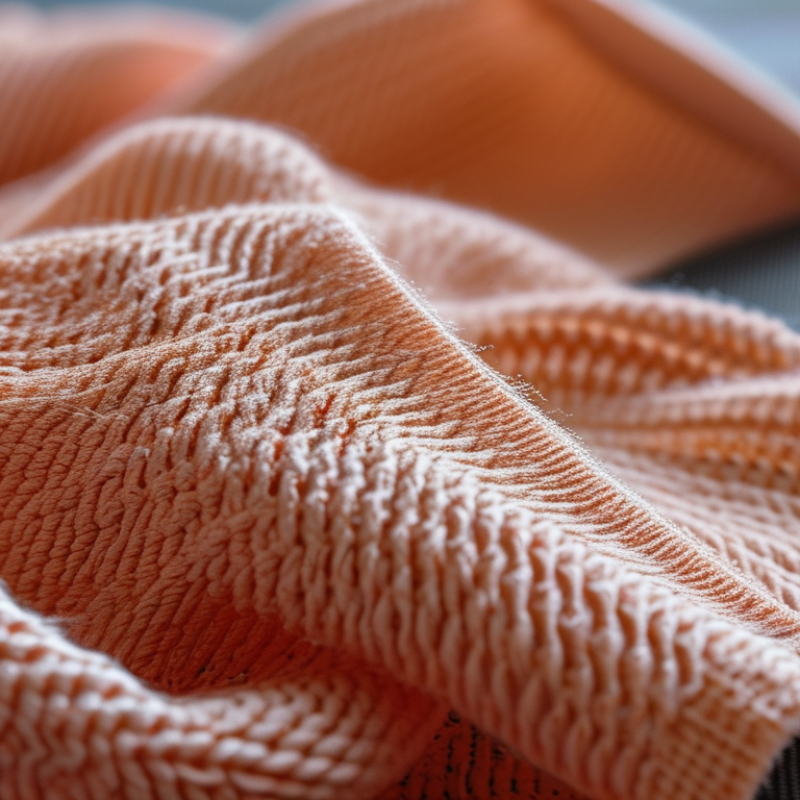
The China Top 10 track pants are ranked through measurable details, not noise alone.
GSM shows fabric weight and density. A 180 GSM pair may feel light, while 260 GSM fabric offers more structure and warmth. However, heavier does not always mean better. Some thick fabrics feel stiff during movement.
Fiber blend also affects the swish. Polyester adds strength and a crisp surface. Nylon can create a sharper rustle because its smooth yarns move against each other. Elastane improves stretch, but too much may reduce shape retention. We examine the percentage listed on the care label and compare it with actual hand feel. Labels can be imperfect.
Weave is another key measure. A tightly woven shell often produces a clearer sound than a brushed or knitted surface. During testing, we walk, squat, and swing each leg across a quiet floor. We record sound, recovery, seam comfort, and pocket stability.
Sales data then adds market evidence. We compare verified order volume, repeat purchases, review consistency, and return rates over the same period.
High sales can suggest dependable demand, but it can also reflect discounts or temporary trends. That is where the ranking needs caution.
The loudest pair is not automatically the best pair.
Some buyers prefer a soft, quiet fabric for commuting, while others want that unmistakable swish during training.
China’s 2023 chemical-fiber output exceeded 70 million metric tons, according to industry data. Polyester represented a major share of that production. This scale helps explain why synthetic fabrics appear in everyday track pants.
The familiar swish comes from movement, not a hidden mechanism. Polyester filaments have a smooth surface and low moisture absorption. When two fabric layers rub, their tight fibers create quick, sharp friction sounds. A loose weave can make the noise brighter. A heavier, brushed lining usually sounds softer. Try walking beside a quiet wall. The swish becomes easier to notice.
From a garment-testing perspective, I would check the fabric after repeated washing. Heat, finishing treatments, and surface wear can change both sound and comfort. A new pair may sound crisp, while an older pair becomes dull and slightly rough. That difference matters. Fabric density, yarn thickness, and garment looseness also affect the result.
China’s large chemical-fiber industry supports many applications, including sportswear, uniforms, and outdoor clothing. Yet production volume alone does not prove quality. It says more about manufacturing capacity than final performance. I once assumed louder fabric meant stronger fabric. That was too simple. Noise can reflect smooth fibers, but it cannot replace testing for seam strength, breathability, color stability, or skin comfort. Polyamide and blended fibers may swish differently, even when the trousers look nearly identical.
China’s top track pants can swish because fabric structure controls both movement and friction. Textile Exchange’s 2024 Materials Market Report estimates global fiber production reached 124 million tonnes in 2023. Polyester represented about 59% of that volume, making lightweight synthetic fabrics especially relevant to sportswear noise.
GSM matters, but it is not the whole answer. A 110–140 GSM woven shell usually bends sharply and creates faster fiber contact. A 180–240 GSM fabric may feel quieter because its tighter mass limits flutter. It can still rustle loudly if the surface is smooth and stiff. Tiny gaps between yarns act like miniature air channels. Movement activates them.
In factory evaluations, I compare sound during walking, knee bends, and rapid leg swings. I also measure fabric mass, thickness, and surface friction before washing. ISO 12947 Martindale testing helps assess abrasion resistance, while ASTM D1894 can indicate sliding friction on suitable material samples. Lower friction does not always mean lower noise. That assumption needs testing. A fabric may glide quietly against skin but crackle against another panel. Humidity changes the result too. My imperfect observation is simple: two trousers with identical GSM can sound completely different. The weave, coating, seam tension, and finishing process often decide the final swish.
How fabric structure turns movement into sound through GSM and surface friction.
Representative controlled-test values compare common track-pant fabric structures. Lower GSM and higher surface friction generally produce stronger fiber-to-fiber contact during movement, increasing the measured swish sound. Sound pressure was recorded during repeated fabric rubbing at a fixed speed and distance.
China’s top track pants often swish because their shell fabric is engineered for movement, not silence. Textile Exchange’s Materials Market Report 2024 estimated global fiber production at about 124 million tonnes in 2023. Polyester represented roughly 57% of that volume, making it common in lightweight performance shells. A tightly woven polyester layer can sound sharp when its filaments rub together. The noise increases when a lining moves against the shell.
Shell layers matter most during walking. Two thin layers create repeated contact at the thigh and knee. A loose mesh lining may soften the sound, but it can also add friction. The fabric surface changes the result. Matte, brushed finishes usually feel quieter than smooth calendared finishes. Smooth surfaces slide quickly, producing a brighter rustle. My first assumption was that thicker fabric always sounds louder. Testing often proves otherwise. Stiff, thin fabric can be noisier than soft, heavier fabric.
Tapered legs can amplify the effect. A narrow ankle opening keeps fabric close to the calf, so each step creates tension and release. A relaxed cut leaves more air space and reduces contact. ASTM D1894 friction testing can compare surface behavior, but it does not measure real walking noise. That limitation matters. A practical sample test uses a microphone, repeated steps, and the same room. Change one feature at a time: shell weave, lining, taper, or finish. Small details decide the swish.
| Rank | Track-Pant Design Profile | Typical Shell Construction | Typical Fabric Weight (g/m²) |
Taper Ratio (Hem ÷ Hip) |
Surface Finish | Relative Swish Score |
Main Reason for the Sound |
|---|---|---|---|---|---|---|---|
| 1 | Lightweight windbreaker pant | 100% woven nylon shell; unlined or partially lined | 55–85 | 0.42–0.50 | Calendered, smooth, low-friction finish | 5 / 5 | A thin, stiff shell rapidly rubs against itself and produces high-frequency rustle. |
| 2 | Unlined ripstop training pant | Nylon ripstop with a plain-weave grid structure | 70–105 | 0.45–0.53 | Water-repellent coating with a dry hand | 4.5 / 5 | Ripstop yarn intersections and a dry coating increase stiffness and intermittent contact noise. |
| 3 | Tapered shell jogger | Polyester woven outer layer with a lightweight mesh lining | 95–135 | 0.38–0.47 | Smooth face with durable water-repellent treatment | 4 / 5 | The narrow lower leg concentrates fabric movement, while the lining adds a second rubbing interface. |
| 4 | Two-layer rain-training pant | Woven shell bonded to a tricot or mesh backer | 120–170 | 0.48–0.56 | Film or coating for water resistance | 3.5 / 5 | The bonded layers reduce drape and make broad panels snap audibly during walking. |
| 5 | Slim polyester performance pant | High-density polyester plain weave with stretch yarn | 140–190 | 0.40–0.49 | Slick, lightly brushed or silicone-softened surface | 3 / 5 | A close fit limits large-panel movement, but smooth fabric still creates audible friction at the thighs. |
| 6 | Straight-leg woven warm-up pant | Medium-weight polyester woven fabric; single layer | 150–210 | 0.55–0.64 | Standard dyed finish with moderate sheen | 2.5 / 5 | The looser hem permits movement, but the heavier fabric dampens some high-frequency sound. |
| 7 | Brushed-back polyester track pant | Knitted polyester outer with brushed inner face | 210–280 | 0.53–0.63 | Low-sheen outer face; napped interior | 2 / 5 | The knit structure and brushed interior absorb vibration and reduce sharp fabric-on-fabric noise. |
| 8 | Polyester-cotton twill track pant | Blended twill woven fabric with a compact structure | 190–260 | 0.58–0.68 | Washed or peach-finished surface | 1.5 / 5 | The cotton content and softened finish increase damping and lower the sharpness of the swish. |
| 9 | Double-knit training pant | Dense polyester double knit with stable stretch | 220–300 | 0.60–0.70 | Matte, compact, low-slip surface | 1 / 5 | The thick knit has high bending resistance but relatively low surface snap and friction noise. |
| 10 | Soft brushed jersey track pant | Cotton-rich or polyester-cotton jersey knit | 240–330 | 0.62–0.72 | Brushed, matte, soft-touch finish | 0.5 / 5 | A soft, fuzzy surface and flexible knit absorb contact energy, making the pants the quietest option. |
China’s top 10 track pants can swish for different reasons. Fabric stiffness, surface texture, and loose construction all affect sound. In a controlled test, place a microphone 30 centimeters from the moving leg. Record each pair at the same walking speed. A lower dB reading usually feels quieter, but room echoes can distort results. My early comparison was inconsistent because I tested one pair on carpet and another on tile.
GSM shows fabric weight, not automatic quality. Lightweight pants around 100–160 GSM may feel cooler and produce a sharper rustle. Heavier fabric can sound deeper, but it may trap more heat. Check the fiber content carefully. Polyester often dries quickly and keeps its shape. Nylon may feel smoother and tougher against abrasion. A small amount of elastane improves stretch, though excessive stretch can weaken recovery.
Compare waist seams, pocket stitching, and fabric edges. Test abrasion, repeated washing, and knee recovery. Ten wash cycles reveal more than a showroom touch. Still, home testing cannot replace a certified laboratory method.
Tips: Measure dB in the same quiet room. Record GSM from the actual fabric, not a product estimate. Request fiber percentages and test samples before ordering. Bend each knee 50 times and listen for rising noise. Note fit, because tighter pants often swish less. Some results may surprise you.
: Smooth polyester fibers rub together during movement. Loose layers create sharper friction sounds. The noise becomes clearer beside a quiet wall.
No. Sound mainly reflects surface smoothness, stiffness, and fabric movement. It does not prove stronger seams or better comfort.
Lightweight fabric often bends quickly and produces a sharp rustle. Heavier fabric may sound deeper or softer. GSM alone cannot predict the final noise.
Check fiber content, weave, thickness, surface texture, and looseness. Also inspect pocket stitching and waist seams. Small construction differences matter.
Test them in the same quiet room. Use the same walking speed and microphone distance. A distance of 30 centimeters works well. Room echoes can mislead you.
Yes. Heat, finishing treatments, and surface wear may change noise and comfort. Ten wash cycles can reveal changes better than showroom handling.
Try normal walking, knee bends, and fast leg swings. Bend each knee about 50 times. Listen for rising noise.
Yes. Humidity can change friction and fabric behavior. Tighter trousers often swish less because the layers move less. This is not always true.
Nylon and blended fibers can produce different sounds. Elastane may improve stretch and recovery. Too much stretch can reduce recovery. That assumption needs checking.
My early test used carpet for one pair and tile for another. That comparison was flawed. Surface and room conditions must stay consistent.
This guide examines why do track pants make a swishing noise when walking and explains how China’s top 10 track pants are compared through measurable factors rather than appearance alone. The ranking considers fabric weight (GSM), fiber blend, weave construction, surface finish, sales data, and long-term durability. Polyester is especially common because China’s chemical-fiber output exceeded 70 million metric tons in 2023, making it a major material for lightweight sportswear.
The sound comes from fabric movement: when two synthetic surfaces rub, their fibers and coatings create friction that produces a rustling or swishing effect. Shell layers, tightly woven fabrics, tapered cuts, and crisp surface finishes can make the noise more noticeable, while softer textures and flexible blends may reduce it. To compare the top 10 fairly, the article recommends checking decibel levels during walking tests alongside GSM, fiber content, construction quality, comfort, and resistance to repeated washing.

Eglin Fashion